






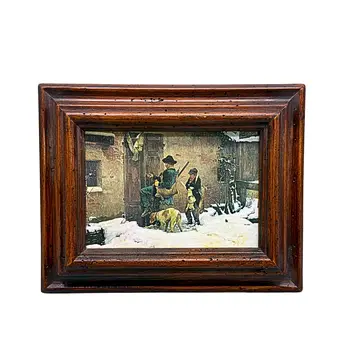

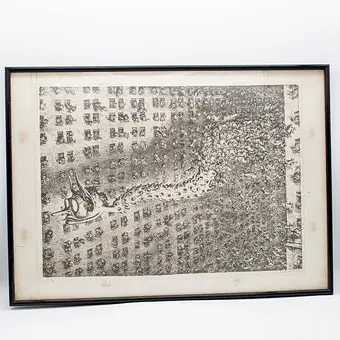



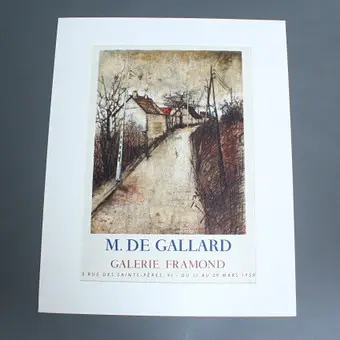

Provenance and nature of the lots
The tables offered come from German art auction houses, catalogue sales in the room with live internet bidding, and timed online sales. There are also lots from seizures, notably at Justiz-Auktion, where seized jewellery and objects are also put up for sale. The listings generally state the artist, technique, dimensions, condition and a published estimate, the Schätzpreis. This estimate is not a sale price: it serves as a guide. Read the German description, as it contains the decisive details on condition, restorations, losses or doubtful signatures.
Checkpoints before bidding
First check the attribution: an artist's name followed by terms such as "zugeschrieben" or "Umkreis" indicates an uncertain attribution. Check the technique, the dimensions with and without frame, and the actual condition in the photos. At private auction houses, buyer's fees are added, often 25 to 33%, plus German VAT of 19% depending on the regime, VAT in addition, VAT included or margin scheme. The droit de suite, Folgerecht, may apply to certain works by living or recent artists. An absentee bid is possible if you cannot follow the sale.
Collection, delivery and export
Many lots must be collected on site, marked "nur Abholung". Some sellers ship within Germany or the EU. For a painting, transport matters: format, frame, glass, fragility of the paint layer. A specialist carrier or a relay address in Germany allows you to bring a lot over. For certain valuable cultural goods, an export licence may be required outside the EU. An EU professional with a valid intracommunity VAT number can often buy without German VAT by providing proof of transport, depending on the seller.